Traffic Relief Begins as Johns Island Interchange Breaks Ground
Charleston County launches construction on the long-awaited U.S. Highway 17 and Main Road interchange, promising relief for daily commuters.
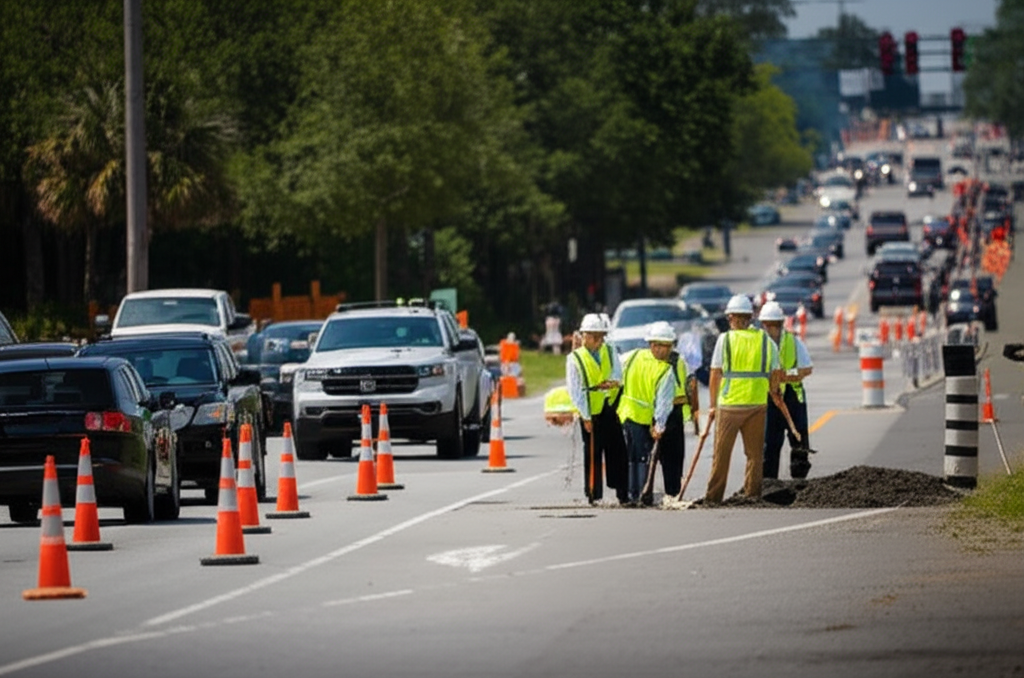
The familiar sight of orange cones and construction barriers now lines the intersection where thousands of Johns Island and West Ashley residents begin and end their daily journeys into Charleston proper. Charleston County has officially broken ground on the interchange at U.S. Highway 17 and Main Road, marking the beginning of what officials hope will transform one of the area’s most congested corridors.
For anyone who has sat in the seemingly endless line of vehicles creeping toward the city each morning, the scene represents more than just another construction project—it signals potential relief from a commute that has grown increasingly frustrating as Charleston’s population has swelled.
The interchange construction represents the first visible component of a comprehensive traffic improvement initiative designed to ease the burden on residents of Johns Island, one of Charleston’s fastest-growing communities. The project addresses what transportation planners have identified as a critical bottleneck in the region’s road network, where suburban growth has far outpaced infrastructure improvements.
“This interchange has been in the planning stages for years, and seeing construction equipment on site represents a significant milestone for our community,” said a Charleston County spokesperson. “We understand the daily challenges our residents face with traffic congestion, and this project is designed to provide meaningful relief.”
The timing of the construction launch reflects broader conversations about growth and infrastructure throughout the Charleston region. As the area continues to attract new residents drawn by its economic opportunities and quality of life, local governments have struggled to keep pace with the demand for improved transportation networks.
Johns Island, once considered a quiet retreat from city life, has experienced dramatic residential development over the past decade. The island’s population growth has created a perfect storm of traffic challenges, with many residents working in downtown Charleston or other parts of the metropolitan area while living in newer subdivisions that were built without corresponding road improvements.
The interchange project involves significant engineering challenges, requiring coordination between state and county transportation departments while maintaining traffic flow during construction. Workers will need to carefully manage the intersection that serves as a primary gateway for island residents, ensuring that temporary disruptions don’t create even worse congestion during the building process.
County officials have emphasized their commitment to minimizing construction-related delays, though they acknowledge that some inconvenience is inevitable during the multi-month project timeline. The construction schedule has been designed to avoid peak traffic periods whenever possible, with much of the heavy work planned for overnight and weekend hours.
The broader traffic improvement initiative extends beyond the single interchange, encompassing a series of road enhancements and infrastructure upgrades throughout the corridor. These complementary projects are intended to work together to create a more efficient transportation network that can handle current traffic volumes while accommodating future growth.
For longtime Charleston residents, the traffic challenges facing Johns Island echo similar growing pains experienced throughout the region. The intersection of preservation and progress has become a defining characteristic of contemporary Charleston life, where residents value the area’s historic character while recognizing the need for modern infrastructure improvements.
The economic implications of the project extend beyond simple convenience for commuters. Improved traffic flow can enhance property values, support local businesses, and make the area more attractive for future economic development. Business owners along the corridor have expressed cautious optimism about the long-term benefits, though many are concerned about potential customer disruptions during construction.
Transportation planners have studied traffic patterns extensively to ensure the interchange design will effectively address current bottlenecks while providing capacity for projected growth. The engineering approach incorporates lessons learned from similar projects throughout the region, including recent improvements to other major intersections that have successfully reduced congestion.
The project also reflects changing approaches to transportation infrastructure in rapidly growing suburban areas. Rather than simply widening existing roads, the interchange design focuses on improving traffic flow efficiency through better intersection management and turning lane configurations.
Community input has played a significant role in shaping the final design, with county officials hosting multiple public meetings to gather resident feedback and address concerns. These sessions revealed the personal impact of traffic congestion on families, with parents describing lengthy commutes that limit time spent with children and workers discussing the stress of unpredictable travel times.
While construction inevitably brings temporary inconvenience, the long-term vision for the corridor represents a commitment to sustainable growth management. County planners hope the improvements will demonstrate how thoughtful infrastructure investment can help preserve community character while accommodating the realities of regional population growth.
As construction equipment settles into what will become a familiar presence along the corridor, Johns Island and West Ashley residents can begin to envision their daily commutes transformed. The orange cones and construction barriers that now define the intersection may prove to be the foundation for a more livable, accessible community where the journey between home and work no longer dominates the rhythm of daily life.
The interchange project timeline extends through the coming months, with completion expected to coincide with other regional transportation improvements that together promise to reshape how residents navigate the Charleston area’s growing suburban communities.